How Sales Expert Brian McCauley Turns Homeowner Objections into Value-Focused Conversations That Close...
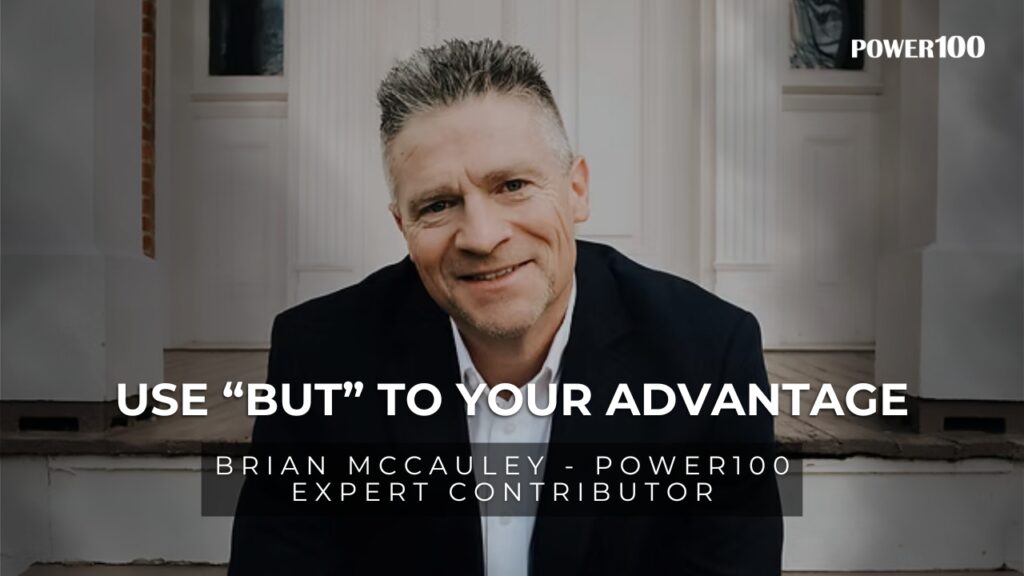
Brian McCauley—Founder of The Sales Guy and Director of Sales Training at Cornerstone Building Brands—shows sales teams from The Home Depot, Eastern Architectural Systems and Stronghouse, Lansing Building Products, and Lowe’s how a simple Neuro-Linguistic Programming concept he calls the “But Flip” can turn “we like it, but…” moments into collaborative conversations about value, financing, and fit, giving reps a practical, real-world way to keep deals alive instead of walking away on a price objection.
By Brian McCauley, Founder of The Sales Guy and Director of Sales Training at Cornerstone Building Brands.
In sales, an objection is often a customer’s response to a question you never asked. If you get a price objection or a “we need to think about it” after you ask for the business, it usually means you missed something earlier in the sales call.
Your first goal in any objection-handling situation is simple: open the conversation back up. You do that by asking questions that help you understand what the customer really wants, why they want it, and what a successful project looks like to them. When you ask the right questions early, you reduce objections—and when they do show up, you are ready to handle them.
Even with great questions, you will still get objections, especially around price. That’s where learning to use the word “but” to your advantage can turn a “no” or “maybe” into a real discussion.
Every sales call—whether in home improvement, building materials, or retail home services—should include a core set of questions. These questions help you see the whole picture:
The answers do two things. First, they help you present the right solution. Second, they give you “ammunition” to prevent or handle objections later. Still, no matter how well you prepare, you will hear things like, “We really like your offering, but the price is more than we wanted to spend.”
That “but” is your turning point.
While researching Neuro-Linguistic Programming (NLP) for a presentation, I came across the idea of the “But Flip.” It immediately made sense to me as a practical sales tool.
Think about how you use the word “but” in everyday life. Usually, whatever comes before “but” is softened or discounted, and whatever comes after “but” is what you really mean—and it’s often negative.
For example, a homeowner might say:“We really like your offering, but the price is more than we wanted to spend.”
What are they really saying?
If you handle “but” the usual way, the conversation ends on the negative. The But Flip changes that.
The concept of the But Flip is simple:
Using the same example, the homeowner says:“We really like your offering, but it costs more than we wanted to spend.”
You respond:“So, this is more than you wanted to spend, but you really like my offering because of the value it provides. Let’s find a way to make this work for you all… how can I help?”
That last question is critical. It opens the door to:
Now you are working with the customer on a solution, instead of walking away with no sale and no resolution for them.
In my work with sales teams across the United States, I’ve seen the But Flip in action with real people in real markets. These are not theories—they’re habits used by teams who sell every day.
Boston, MA – The Home Depot HDIS team
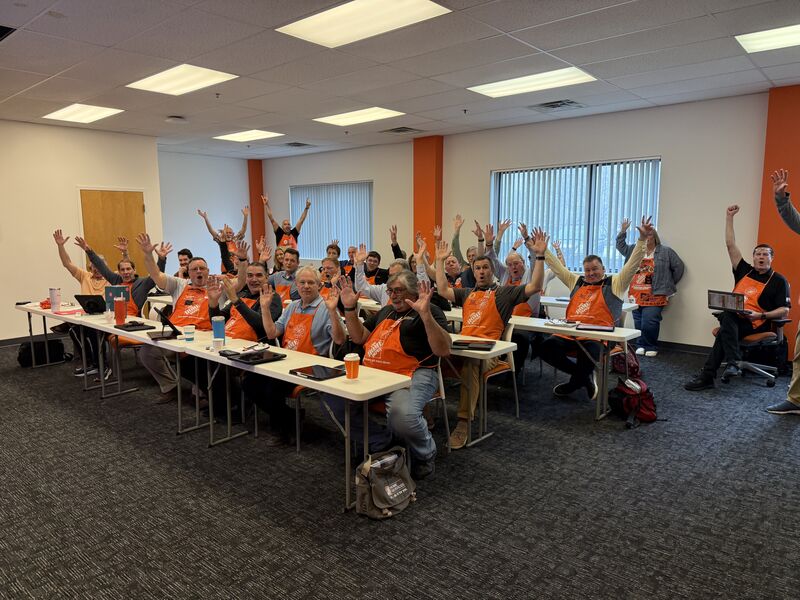
During a Cornerstone Building Brands Level 2 sales training session with The Home Depot HDIS team in the Boston market, we worked with both interior and exterior sales professionals on using “but” to redirect the conversation. One rep shared a common homeowner objection: “We like the product, but we want to get more quotes.” Using the But Flip, they practiced: “I understand you want to get more quotes, but you like this product because it delivers the performance and warranty you want for your home—how can I help you feel confident moving forward with us?” That simple shift helped them keep the conversation on value, not just on price or comparison.
Tampa, FL – Lansing Building Products customers
In Tampa, I trained a large group of Lansing Building Products customers, with Rick Smith and his team doing an outstanding job filling the seats. After my sales session, our Cornerstone Building Brands team led a deep Simonton Windows & Doors product session. Many in the group started using “but” to bring the conversation back to value: “This quote is more than you expected, but you told me you want a window that will last and lower your energy bills—how can we make this work for you?” That mindset creates collaboration instead of conflict.

These teams prove that when you use “but” the right way, you can keep the customer talking, stay focused on value, and move the conversation closer to a sale.
The But Flip is not a perfect, 100% guaranteed method to overcome every price objection—because nothing is. I have never seen a foolproof system for handling all objections. If such a system existed, its creator would be as wealthy as Warren Buffett or Jeff Bezos.
What the But Flip is, though, is a simple and practical strategy that helps move a conversation from “no” or “maybe” toward “yes.” When a homeowner or buyer uses “but” to end on a negative, flip that “but” to end on a positive and see if it leads to a better outcome for both of you. Happy selling.
The Inner Circle unlocks every Power100 interview, PowerChat episode, and expert playbook — free for industry leaders.

Power100 is the nation's premier CEO ranking and media platform for the home improvement industry. Using a proprietary 5-layer evaluation system, Power100 identifies and celebrates the top CEOs, companies, and strategic partners driving innovation, customer satisfaction, and leadership excellence across the country.